Is It a Herniated Disc or Degenerative Disc Disease? Key Signs
Pain Medicine Physicians & Orthopedics in
Oct 21, 2026
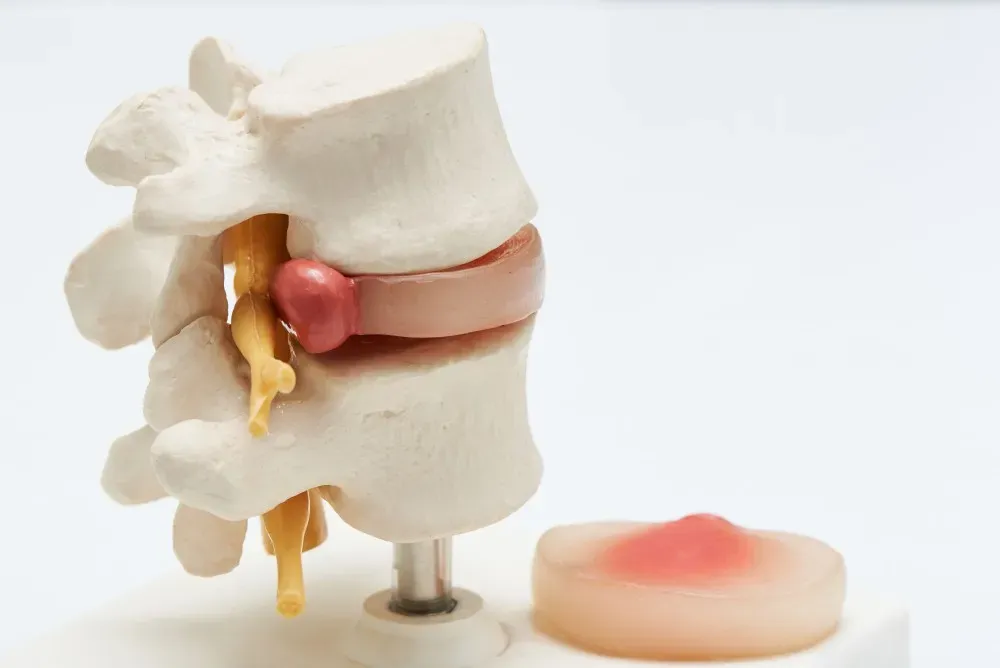
If you live with persistent back pain, you might wonder what is happening inside your spine. Two of the most common causes of back discomfort are a herniated disc and degenerative disc disease. While they both affect your spinal discs, they have different symptoms and require different approaches.
At Garden State Pain & Orthopedics, Dr. Neil Sinha and our team help patients find the root cause of their discomfort. We provide personalized care for spinal conditions at our offices in Edison, Clifton, Hazlet, Jersey City, and West Orange, New Jersey. Understanding your symptoms is the first step toward lasting relief.
A herniated disc occurs when the soft center of a spinal disc pushes through its outer ring. This often happens suddenly due to an injury or a sudden twist. It can pinch nearby nerves, causing sharp, shooting pain down your leg.
In contrast, degenerative disc disease is not actually an active disease. The American Academy of Orthopaedic Surgeons clarifies that it is a normal, expected part of the aging process. Over time, your spinal discs naturally lose hydration and shrink. This wear and tear usually causes a dull, chronic ache in your lower back that may worsen when you sit.
At our practice, we look at your symptoms, medical history, physical exam, and imaging when needed to determine what may be contributing to your pain.
The symptoms of these two conditions often feel very different. Recognizing these signs can help you understand what your body is experiencing.
A herniated disc that irritates a nerve may cause:
Degenerative disc changes may be associated with:
Our specialists evaluate these symptoms to determine the best path forward. Whether you have a sudden injury or long-term wear, we focus on restoring your mobility.
Many patients worry that spinal pain automatically means they need surgery. Fortunately, most disc issues resolve with conservative care. A 2024 review in Deutsches Ärzteblatt International found that symptoms resolve within 6 to 12 weeks in about 60% to 80% of cases.
To support this natural healing, we prioritize nonsurgical therapies. For chronic low back pain without a condition that requires specific medical or surgical treatment, the American Academy of Family Physicians recommends starting with nonpharmacologic approaches such as exercise and physical therapy.
When appropriate, physical therapy can help improve strength, mobility, and the way you move with back pain.
If a herniated disc is irritating a nerve and causing radiating leg pain, an epidural steroid injection may sometimes provide short-term symptom relief.
If conservative treatments do not bring relief, we may discuss other options. A 2025 meta-analysis in the Journal of Medical Surgery and Research analyzed 4,965 patients with symptomatic lumbar disc herniations. The analysis found that surgery provided faster improvement in pain and function at three to six months, while long-term outcomes were similar between the surgical and conservative groups beyond two years.
However, the study also noted a 10% to 15% crossover rate where patients eventually chose surgery because they could not tolerate persistent symptoms. If you experience progressive muscle weakness or severe pain that limits your daily life, surgical decompression may be necessary.
Our team walks you through every option, from physical therapy to minimally invasive procedures. We help you feel confident and supported throughout your recovery.
Do not let back pain control your life. If you are struggling with spinal discomfort, schedule a visit with our specialists at Garden State Pain & Orthopedics today. We will help you find the right answers and get you back to the activities you love.