Why Do Long Car Rides Make Your Back Hurt? What Your Body Is Trying to Tell You
Pain Medicine Physicians & Orthopedics in Edison, Clifton, Hazlet, Jersey City and West Orange, NJ
Nov 17, 2026
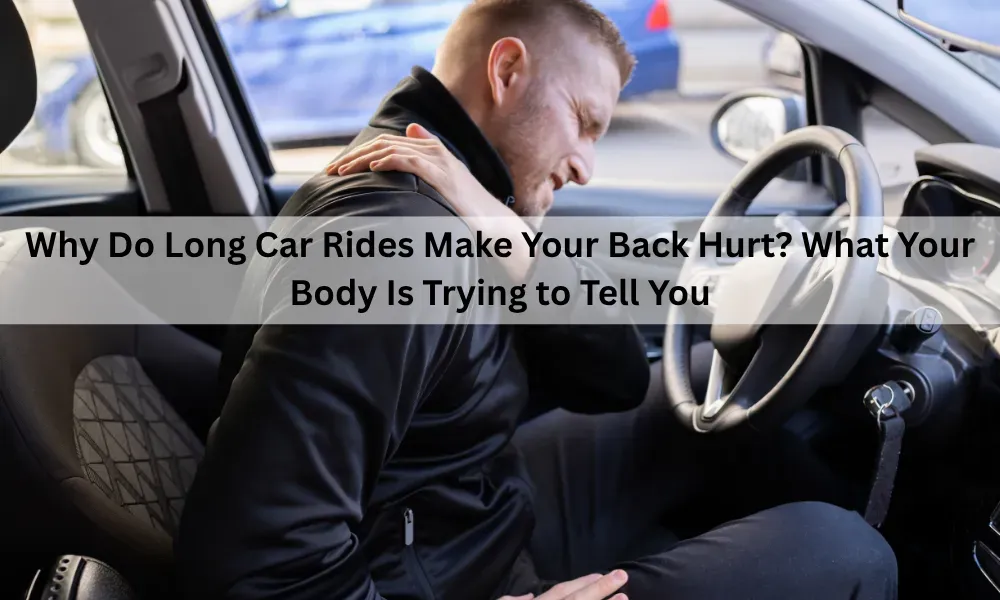
Whether you're commuting to work, heading down the shore, taking a road trip, or sitting in traffic for what feels like forever, long car rides can leave your body feeling surprisingly sore.
You may step out of the car with a stiff lower back, tight hips, an aching neck, or even pain traveling into your leg. While occasional stiffness after sitting for a long time is common, recurring or persistent pain behind the wheel may be a sign that an underlying back, joint, or nerve condition is being aggravated by prolonged sitting.
According to the National Institute of Arthritis and Musculoskeletal and Skin Diseases (NIAMS), back pain can have many causes, including problems involving the muscles, discs, joints, and nerves of the spine.
So why can sitting in a car make everything feel worse? Here are some of the most common reasons.
Even when you're sitting comfortably, your muscles are still working to support your spine and maintain your posture.
The longer you remain in one position, the more likely you are to experience:
Muscle fatigue
Lower back stiffness
Tight hips
Neck and shoulder tension
Reduced mobility when you finally stand
This doesn't necessarily mean something is wrong with your spine. Sometimes your body simply needs movement.
Taking regular breaks during longer drives can give your muscles and joints an opportunity to change positions and move.
Think about how you actually sit while driving.
One leg is repeatedly operating the pedals. Your arms are extended toward the steering wheel. You may lean slightly toward one side, reach forward, or gradually slouch as the drive continues.
Over time, an uncomfortable driving position may contribute to muscle fatigue and aggravate existing back or neck pain.
Your seat should allow you to comfortably reach the pedals and steering wheel without excessively leaning forward or stretching.
Small adjustments can sometimes make a big difference.
Long periods of sitting keep the hips in a flexed position.
After several hours, the muscles surrounding the hips may feel tight or stiff, particularly when you first get out of the vehicle.
You might notice:
Tightness across the front of the hips
Difficulty standing fully upright immediately
Lower back stiffness
Discomfort when taking your first few steps
Because the hips, pelvis, and lower back work together during movement, stiffness in one area can sometimes influence how another area feels.
If your discomfort doesn't stay in your back, pay attention to where it travels.
Pain that moves from the lower back or buttock into the leg may be associated with irritation of the sciatic nerve or its contributing nerve roots.
Symptoms may include:
Shooting pain
Burning
Tingling
Numbness
Pain extending below the knee
Leg or foot weakness
Prolonged sitting can aggravate symptoms in some people with sciatica or other nerve-related conditions.
If getting out of the car consistently causes shooting or radiating leg pain, it may be worth having the symptoms evaluated rather than assuming you're simply stiff.
Your lower back isn't the only area affected during a long drive.
Keeping your head in relatively the same position for hours can contribute to neck and shoulder tension, especially if you're leaning forward, gripping the steering wheel tightly, or sitting with your shoulders rounded.
Some people may notice:
Neck stiffness
Shoulder tightness
Headaches
Upper back discomfort
Reduced ability to comfortably turn the head
This can become particularly noticeable for people who already experience chronic neck pain.
Sometimes the car isn't actually causing the problem.
Instead, prolonged sitting may aggravate symptoms from an existing condition.
Depending on the individual, this may include:
Herniated or bulging discs
Degenerative changes of the spine
Arthritis
Sciatica
Nerve irritation
Previous back or hip injuries
Chronic muscle or joint pain
That's an important distinction.
If pain occurs every time you drive for an extended period, the goal shouldn't only be finding a more comfortable seat. It may also be worth determining why sitting repeatedly triggers your symptoms.
A few simple changes may help reduce stiffness and discomfort during longer drives.
Position yourself close enough to comfortably reach the steering wheel and pedals without leaning forward or overstretching.
If your vehicle doesn't provide adequate lumbar support, additional support may help you maintain a comfortable position.
During long trips, stop periodically when it is safe to do so. Get out of the vehicle, walk around, and gently change positions.
Keeping a phone, wallet, or another bulky item in a back pocket can make your sitting position uneven and uncomfortable.
After a long drive, gentle walking can help your body transition out of a prolonged seated position.
Mild stiffness that disappears shortly after getting out of the car may not be concerning.
However, consider scheduling an evaluation if:
Pain happens during almost every long drive
Symptoms continue long after you've stopped driving
Pain is becoming progressively worse
Pain travels into your buttock or leg
You experience numbness or tingling
Your leg or foot feels weak
Pain interferes with work, sleep, or everyday activities
New or rapidly worsening weakness, numbness around the groin or saddle area, or loss of bladder or bowel control requires prompt medical attention.
At Garden State Pain & Orthopedics, our pain management and orthopedic specialists evaluate back, hip, neck, and nerve symptoms to determine what's actually causing your discomfort.
If long periods of sitting repeatedly trigger your pain, our team can evaluate whether your symptoms may be related to the muscles, joints, discs, or nerves.
Depending on your diagnosis, your personalized treatment plan may include:
Physical therapy coordination
Diagnostic imaging when appropriate
Image-guided injections
Epidural steroid injections
Medial branch blocks
Radiofrequency ablation
Other minimally invasive pain management procedures
Orthopedic evaluation when appropriate
Rather than simply helping you tolerate the next long drive, the goal is to identify the underlying source of your symptoms and help you move more comfortably in your everyday life.
Feeling a little stiff after sitting in the car for hours can happen to anyone. But if every commute or road trip leaves you dealing with significant back pain, radiating leg pain, numbness, or persistent stiffness, your body may be telling you something worth investigating.
Schedule an evaluation with Garden State Pain & Orthopedics at one of our convenient New Jersey locations in Clifton, Edison, West Orange, Hazlet, or Jersey City to determine what's causing your symptoms and explore treatment options designed around your needs.
Remaining seated for an extended period can contribute to muscle fatigue, stiffness, and discomfort. Driving position and existing back conditions may also influence your symptoms.
Prolonged sitting can aggravate sciatic-type symptoms in some people. Pain traveling from the lower back or buttock into the leg, particularly with numbness or tingling, should be evaluated if it persists.
There isn't one interval that's appropriate for everyone. On longer trips, plan regular safe stops so you can get out of the vehicle, walk, and change positions rather than remaining seated for hours at a time.
Your hips remain flexed while sitting. Prolonged positioning can contribute to temporary stiffness or muscle tightness, although persistent hip pain may have another underlying cause.
If pain consistently occurs while driving, persists afterward, worsens over time, or is accompanied by numbness, tingling, weakness, or radiating leg pain, a medical evaluation can help determine the underlying cause.
National Institute of Arthritis and Musculoskeletal and Skin Diseases (NIAMS)
Back Pain
American Academy of Orthopaedic Surgeons (AAOS) – OrthoInfo
Low Back Pain
Understanding Sciatica: More Than Just Lower Back Pain
Your Back Is Stronger Than You Think: 6 Myths About Back Pain Debunked
Muscle Pain vs. Nerve Pain: Understanding the Difference
Why Tingling and Numbness Should Never Be Ignored
How Chronic Pain Affects Sleep and Recovery
Back pain after driving? Learn why long car rides can trigger back, hip, neck, and sciatic nerve pain, plus when persistent symptoms should be evaluated.